Based on my experiences gathered during the last 25 years, I decidedly think three paths may lead to experiencing the most intensive depth of a photograph, from the moment of exposition to the interest of the spectator: presenting the fruits of a longer or shorter period in the form of a traditional exhibition, transmitting a more comprehensive material by creating a strong atmosphere within the framework of a slideshow screening with music or using the pages (two-page spreads!) of a photo album to convey the thoughts and feelings of the artist. Compared to the one-time occasions of the exhibitions and screenings, books are always available and can live a long life independent of the author.

A photo album – in the best case – does not only cause enjoyment to the recipient but also to the author who undertook the job of creating it, supplying him with creative tasks for many months. The often long and complex process of editing ”demands” as much fantasy, freedom and inspiration from the photographer as taking the photographs themselves. (In my case this rather means insight than preparing.)
When I got the opportunity to publish my first bigger album (Still Movies, 2008) thanks to the support of the National Cultural Foundation, the institution without which none of my books could have been published, I instantly knew that I would add another ”intellectual layer” to my photos; since then I’ve been pairing them up with aphorisms. Not beacuse I don’t think my pictures powerful enough to lead independent lives, on the contrary: I believe photography – as an essential, thick genre – can use a little breath of air or a break, when pictures are present in our everyday lives in such great quantities. At the moment of discovering the positive symbiosis of photos and texts, a promising possibility presented itself for which – based on the individual differences of reception time – the form of a book might serve as ideal platform.
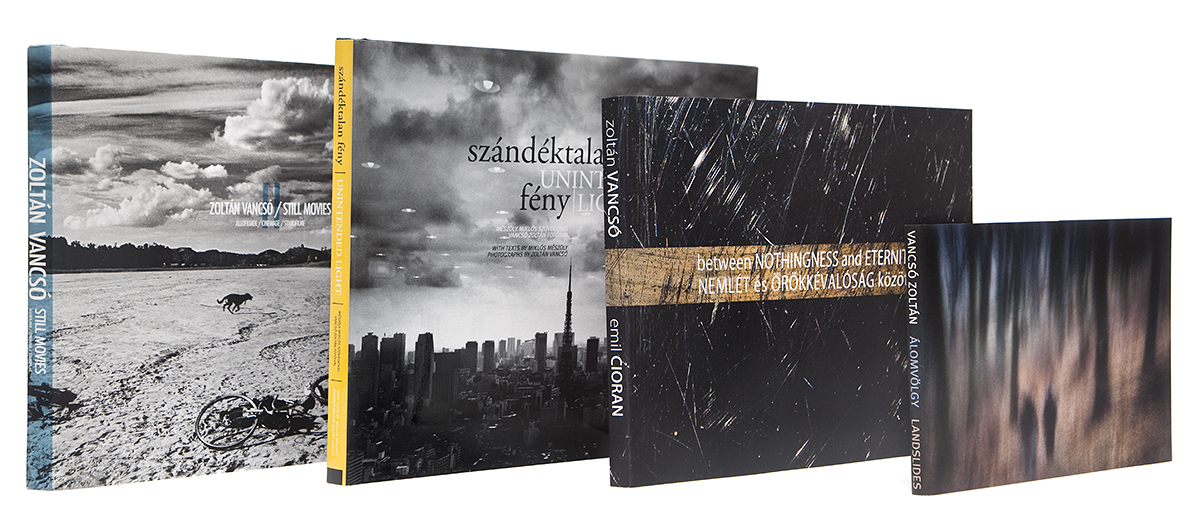
I might not give away a big secret by telling you that I run into aphorisms during reading the same way I find (or I am found by) the pictures I will later attribute importance to. At the same time I feel it my responsibility – by doing everything in my power to let this importance be discovered, experienced by others too – to ensure the longevity of my pictures. From the author’s point of view the discovery of pairing picure and text is the same as taking the picture itself. I am always overjoyed to realize while reading that I have previously taken a photo of the given writer’s thought. Quote-pairing always happens in retrospect, I could never take pictures to match texts that I just found.
A könyveim születése gyakran több időt ölel át, mint egy terhesség kilenc hónapja, és bizony az utolsó hetek, a nyomdába kerülés időszaka mindig a legfájdalmasabb, amikor kiszolgáltatott helyzetbe kerül az alkotó, mivel a gépmester veszi át az irányítást. Ahogy egy szülésnél is a szülész orvos felkészültsége, figyelme meghatározó tud lenni, egy fotóalbum fizikai megjelenése is nagyban függ attól, hogy a gépmester mennyire volt körültekintő.

If the conjunctions are favorable and we can take part in the state of grace to become creators of a time-extending genre, or on the other side, the recipients of the fruits of this creation, then photography – and this process of creation – reached its goal: it enriched at least two souls. As Ansel Adams says: ”There are two people in every photograph. The photographer and the spectator.”
Zoltán Vancsó